I was grading a paper written by Jon Mark Allen for the SANS Technology Institute, an accredited cybersecurity graduate school, when I came across this section:
A good illustration of the consequences of clinging to a failing strategy is the fiasco of Duke Nukem Forever. After the perfect timing and exceptional performance of the original Duke Nukem 3D, George Broussard led the sequel project for its full duration of 12 years. Development in 1997 and progressed quickly enough and to such rave reviews that everyone believed it would be released in late 1998. But "Broussard was clearly obsessed with making his product as aesthetically appealing as possible", to the degree that the project switched gaming engines twice during development – essentially restarting from scratch each time. (Thompson, 2009)
Mike Wilson, a former games marketer with id Software and 15-year veteran of the industry, suspects that Broussard was paralyzed by the massive success of Duke Nukem 3D. "When Duke came out, they were kings of the world for a minute," Wilson says. "And how often does that happen? How often does someone have the best thing in their field, absolutely? They basically got frozen in that moment." (ibid.)
Eight years into the project, the staff began to leave for fear that their careers would be completely spent on one game that would never ship. One developer said he left because he "was burned out after working on the same project for five years without any end in sight." Rafael Van Lierop, a creative director hired in 2007, when he saw what was happening, said "Wow, how many times have you been here, near the finish line, and you thought you were way out?" Broussard and company burned through their funding and were eventually forced to shut doors in 2009 without ever delivering arguably the most anticipated game ever (not) produced. (ibid.)
Well, everyone fails at some point, but nobody can deny that Mr. Broussard and Duke Nukem left their mark on America. This summary was based on a fantastic Wired magazine article by Clive Thompson. I really had to smile, sixteen years ago, I was working on a network data reduction project and we needed a visualization system for the analyst. When asked what I recommended, I replied, "Hire the Duke Nukem coding team."
I serve as the chair person for SANS Rocky Mountain 2017 on June 12 in Denver. I think George Broussard would appreciate the attention to detail and the efforts the staff and faculty go through to execute as close to flawlessly as one can get.
Tuesday, September 13, 2016

Wednesday, September 7, 2016
Bernhard Goetz
January 1981, Bernhard Goetz was attacked by three teenagers at a subway station. Two of the three assailants managed to escape. The third spent just a few hours at a police station. Goetz was furious and, before the year was out, he applied for a gun permit.
According to Biography, "On December 22, 1984, Goetz entered an empty Manhattan train, carrying an unlicensed .38 caliber revolver. Also on the car were four teenagers: Troy Canty, Barry Allen, Darrell Cabey and James Ramseur. As witness testimony later stated, Goetz had barely taken his seat when the young men approached Goetz for $5. When Goetz refused, Canty responded, "Give me your money."
Suspecting he was being set up for another mugging, Goetz stood up and said, "You all can have it." Goetz started firing his revolver, wounding all four teens. When the train came to a stop, a startled Goetz ran out of the car and eventually fled the city, making his way to Concord, New Hampshire. Eight days after the shooting, Goetz finally turned himself into police."
Goetz was acquitted! The trial as told by Law2, "Attorney Barry Slotnick followed with the opening
statement for the defense. Slotnick painted
his client as "neither Rambo nor a vicious
predator," but rather as someone surrounded by
threatening youths intent on robbing him and who,
in response, took "proper and appropriate
action." He warned the jury to be skeptical
of evidence presented by the two testifying
witnesses, Canty and Ramseur because they had a
motive to lie to further their pending
multi-million dollars civil suits against
Goetz. He variously referred to Goetz's
shooting victims as "hoodlums," "criminals,"
"savages," "punks," "low-lifes," and
"thugs." He told jurors that the four youths
"assumed the risk that a citizen like Bernhard
Goetz would lawfully, justifiably, fire a weapon
in protection of his property."
"Jurors voted
to acquit Goetz on the four attempted
murder charges on the theory that, while
he wanted to end the real or imagined
threat posed by the teenagers, he lacked
the motivation to kill them. In
the words of one juror, Goetz might have
been reasonable or unreasonable in his
feeling that he was trapped, "but he
didn't go out hunting." The most
difficult deliberations concerned charge
11, assault in the first degree against
Darrell Cabey. The fifth bullet
fired by Goetz, the one that paralyzed
(a most likely seated) Darrell Cabey,
was hard to excuse. The jury
debated whether Goetz had time to
conclude that whatever threat the youths
presented were effectively ended by the
time he went over to Cabey and,
according to his own confession, said,
"You seem to be doing all right; here's
another," before firing his final
shot. Some jurors noted that
Goetz's account contradicted several
other witnesses who described the shots
as coming in rapid succession. The
"rapid succession" theory allowed jurors
to accept the defense argument that
Goetz effectively went on "automatic
pilot" after he fired the first shot;
the five shots were all really one
event."
"In a 2004
interview, CNN's Nancy Grace asked
Goetz, "Do you ever wish you had just
given them $5?" Goetz replied, "I think
it would have been the better thing for
me, in my life, if I had just given them
all my money, even though they might
have pushed me around and beat me up for
a second." But Goetz then added,
"But I think it was good for New York
City. What happened was very good
for New York City because it forced them
to address crime."
Goetz certainly left his mark on America, Wikipedia remarks, "After reaching an all-time peak in 1990, crime in New York City dropped dramatically through the rest of the 1990s. As of 2006, New York City had statistically become one of the safest large cities in the U.S., with its crime rate being ranked 194th of the 210 American cities with populations over 100,000. New York City crime rates as of 2014 were comparable to those of the early 1960s.
Goetz and others have interpreted the significance of his actions in the subway incident as a contributing factor precipitating the groundswell movement against crime in subsequent years. While that claim is impossible to verify, Goetz achieved celebrity status as a popular cultural symbol of a public disgusted with urban crime and disorder."
Goetz would love to visit SANS Rocky Mountain 2017, as an engineer focused on the details of security, he would be amazed at how much the defensive cybersecurity community has accomplished without the use of a .38.
Monday, September 5, 2016
I. M. Pei - Famous architect
Ieoh Ming Pei was born in Guangzhou, China in 1917, the son of a prominent banker. He moved to New York to study architecture and established his first architectural firm in 1955.
Pei became famous for designing the Bank of China Building in Hong Kong and the Pyramid at the Louvre in Paris. Many of his best buildings may be found in the United States, including the Four Seasons Hotel on 57th Street in New York, the John F. Kennedy Library in Boston, the National Gallery of Art's East Building in Washington, and the Rock and Roll Hall of Fame in Cleveland. These light-flooded structures are powerful and impress with exceptional clarity.
Students attending SANS Rocky Mountain will be able to visit one of his wonders. Historic Denver, "The idea to create a mall on 16th street in Denver began as early as 1959, but was not given serious consideration until 1971. Following years of planning and construction, the 16th Street Mall, designed by the internationally renowned architectural firm I.M. Pei & Partners of New York, opened on October 4, 1982 to a crowd of over 200,000 people. The main features of I.M. Pei’s design include poly-chromatic granite pavers, wide sidewalks, and a central tree lined corridor flanked by iconic lighting fixtures. Now, decades later, the 16th Street Mall has evolved into the veritable “heart and soul” of downtown Denver and a top visitor attraction in the metropolitan area. Its free shuttles serve an average of 55,000 commuters and tourists per day, creating significant wear and tear that jeopardize the original design and materials. However, in May 2008 a panel of experts from the Urban Land Institute declared the 16th Street Mall to be “public art of the highest international quality,” and strongly urged Denver to fix, not physically modify, the Mall."
Sadly, despite all of his incredible achievements, most news stories seem to be about the attack he suffered, According to the NY Daily News, "Eter Nikolaishvil, 28, “forcefully twisted” the 98-year-old icon's arm at his Manhattan townhouse on Dec. 13, 2015, according to court papers. Nikolaishvil agreed to complete eight anger management sessions. Prosecutors said Pei and his family were consulted on the plea offer that was made to the former employee."

Picture of Eter Nikolaishvili from NY Daily News story
He is also famous for the Centurion Condominium at 33 West 56th Street in the heart of Manhattan. PRNNEWS says, "Pei, now the world's most celebrated living architect, looks back at 70 years of groundbreaking architectural work across the globe. "Still, New York is the most exciting city in the world. It is pulsating with life - and architecture is the mirror of life," says Pei.

I.M. Pei would love to visit SANS Rocky Mountain 2017 where the courseware and instruction has the light and clarity he always sought for and a peek at the mall wouldn't hurt. And all those beaming projectors would certainly remind him of his greatest work, Pyramide du Louvre.
Pei became famous for designing the Bank of China Building in Hong Kong and the Pyramid at the Louvre in Paris. Many of his best buildings may be found in the United States, including the Four Seasons Hotel on 57th Street in New York, the John F. Kennedy Library in Boston, the National Gallery of Art's East Building in Washington, and the Rock and Roll Hall of Fame in Cleveland. These light-flooded structures are powerful and impress with exceptional clarity.
Students attending SANS Rocky Mountain will be able to visit one of his wonders. Historic Denver, "The idea to create a mall on 16th street in Denver began as early as 1959, but was not given serious consideration until 1971. Following years of planning and construction, the 16th Street Mall, designed by the internationally renowned architectural firm I.M. Pei & Partners of New York, opened on October 4, 1982 to a crowd of over 200,000 people. The main features of I.M. Pei’s design include poly-chromatic granite pavers, wide sidewalks, and a central tree lined corridor flanked by iconic lighting fixtures. Now, decades later, the 16th Street Mall has evolved into the veritable “heart and soul” of downtown Denver and a top visitor attraction in the metropolitan area. Its free shuttles serve an average of 55,000 commuters and tourists per day, creating significant wear and tear that jeopardize the original design and materials. However, in May 2008 a panel of experts from the Urban Land Institute declared the 16th Street Mall to be “public art of the highest international quality,” and strongly urged Denver to fix, not physically modify, the Mall."
Sadly, despite all of his incredible achievements, most news stories seem to be about the attack he suffered, According to the NY Daily News, "Eter Nikolaishvil, 28, “forcefully twisted” the 98-year-old icon's arm at his Manhattan townhouse on Dec. 13, 2015, according to court papers. Nikolaishvil agreed to complete eight anger management sessions. Prosecutors said Pei and his family were consulted on the plea offer that was made to the former employee."

Picture of Eter Nikolaishvili from NY Daily News story
He is also famous for the Centurion Condominium at 33 West 56th Street in the heart of Manhattan. PRNNEWS says, "Pei, now the world's most celebrated living architect, looks back at 70 years of groundbreaking architectural work across the globe. "Still, New York is the most exciting city in the world. It is pulsating with life - and architecture is the mirror of life," says Pei.
I.M. Pei would love to visit SANS Rocky Mountain 2017 where the courseware and instruction has the light and clarity he always sought for and a peek at the mall wouldn't hurt. And all those beaming projectors would certainly remind him of his greatest work, Pyramide du Louvre.
Saturday, August 27, 2016
Ivo Zadarsky
Ivo is an American character that was born in Communist
Czechoslovakia. His initial claim to fame is chronicled by his Ivoprop company, "3 A.M., August 4, 1984
- A
young man, working in starlit darkness, feverishly completes the assembly of a
homemade trike aircraft. Carefully, he points the wheels in the direction of
Vienna, thirty miles away on
the other side of the Czechoslovakian border The silence is finally broken by
the starting of a two-cylinder Trabant auto engine and the quiet swishing of the
propeller sound swells to a blare as the shadowy delta-wing moves forward across
the plowed field and lifts off. Ivo Zdarsky is on his way to becoming the first
refugee to successfully fly a homebuilt aircraft over the Iron Curtain to
freedom."
He sold that plane to the Checkpoint Charlie Museum in Berlin, "It is one of the most frequently visited museums in Berlin, with 850,000 visitors in 2007. Through its presentation of the many ways in which people tried to escape East Germany, it aims to bring that period of history to life and ensure that it is not forgotten. At the same time the museum has been criticised for having too little space for the exhibits, the way they are presented and the explanatory texts that accompany them are considered out of date and ideologically biased. A critical examination of western propaganda in the cold war and especially on the subject of the Berlin Wall is non-existent."[Wikipedia].
Ivo founded a propeller company, ( One of his props is on its way to Mars as the first
interplanetary Ivoprop), and is now an inventor in Utah. Ivo would love to visit SANS Rocky Mountain where he would be in an environment with other creative successful Americans.
Monday, August 15, 2016
Paul Robeson
One of the great American characters that created the land of the free that we live in is Paul Robeson. We may not agree with everything that he believed in, but we don't come from his circumstances either.
According to Archives.gov, "He was the son of a former slave, born and raised during a period of segregation, lynching, and open racism. He earned a four-year scholarship to Rutgers University, making him the third African American to attend the school. There he was a member of the prestigious Cap and Skull Honor Society, played four varsity sports (baseball, football, basketball, and track), won speech and debate tournaments, and managed to graduate valedictorian of his class. After graduation, Robeson applied his athletic abilities to a short career in professional football. Aside from his prowess on the gridiron, he earned a law degree and changed the direction of his career. His legal career was cut short, however, after a secretary refused to take dictation from him solely because of the color of his skin. He left law and turned to his childhood love of acting and singing. Robeson starred in Shakespeare's Othello, the musical Showboat, and films such as Jericho and Proud Valley. He was one of the top performers of his time, earning more money than many white entertainers. His concert career spanned the globe: Vienna, Prague, Budapest, Berlin, Paris, Amsterdam, London, Moscow, New York, and Nairobi.
Robeson's travels opened his awareness to the universality of human suffering and oppression. He began to use his rich bass voice to speak out for independence, freedom, and equality for all people. He believed that artists should use their talents and exposure to aid causes around the world. "The artist must elect to fight for freedom or slavery. I have made my choice," he said. This philosophy drove Robeson to Spain during the civil war, to Africa to promote self-determination, to India to aid in the independence movement, to London to fight for labor rights, and to the Soviet Union to promote anti-fascism. It was in the Soviet Union where he felt that people were treated equally. He could eat in any restaurant and walk through the front doors of hotels, but in his own country he faced discrimination and racism everywhere he went."

According to Archives.gov, "He was the son of a former slave, born and raised during a period of segregation, lynching, and open racism. He earned a four-year scholarship to Rutgers University, making him the third African American to attend the school. There he was a member of the prestigious Cap and Skull Honor Society, played four varsity sports (baseball, football, basketball, and track), won speech and debate tournaments, and managed to graduate valedictorian of his class. After graduation, Robeson applied his athletic abilities to a short career in professional football. Aside from his prowess on the gridiron, he earned a law degree and changed the direction of his career. His legal career was cut short, however, after a secretary refused to take dictation from him solely because of the color of his skin. He left law and turned to his childhood love of acting and singing. Robeson starred in Shakespeare's Othello, the musical Showboat, and films such as Jericho and Proud Valley. He was one of the top performers of his time, earning more money than many white entertainers. His concert career spanned the globe: Vienna, Prague, Budapest, Berlin, Paris, Amsterdam, London, Moscow, New York, and Nairobi.
Robeson's travels opened his awareness to the universality of human suffering and oppression. He began to use his rich bass voice to speak out for independence, freedom, and equality for all people. He believed that artists should use their talents and exposure to aid causes around the world. "The artist must elect to fight for freedom or slavery. I have made my choice," he said. This philosophy drove Robeson to Spain during the civil war, to Africa to promote self-determination, to India to aid in the independence movement, to London to fight for labor rights, and to the Soviet Union to promote anti-fascism. It was in the Soviet Union where he felt that people were treated equally. He could eat in any restaurant and walk through the front doors of hotels, but in his own country he faced discrimination and racism everywhere he went."

Somehow, though, he never left the mark on history that he deserved. According to Biography.com, "Robeson published his biography, Here I Stand, in 1958, the same year that he won the right to have his passport reinstated. Robeson again traveled internationally and received a number of accolades for his work, but damage had been done, as he experienced debilitating depression and related health problems. Robeson and his family returned to the United States in 1963. After Eslanda's death in 1965, the artist lived with his sister. Robeson died from a stroke on January 23, 1976, at the age of 77, in Philadelphia, Pennsylvania."
Or, as Archive.gov puts it, "To celebrate, Robeson gave his first New York concert in a decade at a sold-out Carnegie Hall. But the years of struggle had taken a personal and professional toll. Negative public response and the ban on his travel led to the demise of his career. Before the 1950s, Robeson was one of the world's most famous entertainers and beloved American heroes--once being named "Man of the Year" by the National Association for the Advancement of Colored People. Despite all his accomplishments, Paul Robeson remains virtually ignored in American textbooks and history."
Take a minute to listen to his version of Old man river from Showboat:
Paul would have loved SANS Rocky Mountain 2017 with so many talented and committed instructors.
Sunday, August 14, 2016
Fiorello La Guardia
According to the Jewish Virtual Library, though he was Jewish, "he allowed the public to identify him as Italian, not Jewish, even under the most tempting of political circumstances. When issues of Jewish interest came up in New York or national politics, however, the "Little Flower" was an ardent advocate for Jewish rights. As mayor of New York, he was one of Hitler’s most outspoken opponents.
LaGuardia was born in Greenwich Village in 1882 to Achille Luigi Carlo LaGuardia, a Catholic, and Irene Luzzato Coen, who had been raised in an observant Jewish home in Trieste. In 1880, the couple emigrated to the United States. After their third child was born, Achille joined the U.S. Army. The family was sent to remote outposts in South Dakota and Arizona. In 1898, Achille became gravely ill from eating "embalmed" rations supplied to the Army and died four years later. When Fiorello LaGuardia was elected to Congress in 1922, the first bill he introduced called for the death penalty for "scavengers" who supplied tainted food to the military. The bill did not pass, but LaGuardia never lost his Progressive disgust for government corruption or the ability of "the interests" to escape justice."

As the Britannica puts it, "La Guardia was elected to the House of Representatives as a progressive Republican in 1916, but his term was interrupted by service as a pilot in World War I. He was returned to Congress in 1918 and, after serving as president of the New York City board of aldermen in 1920–21, was reelected to the House in 1922. He was reelected four more times, and in the House he opposed Prohibition and supported woman suffrage and child-labour laws. He cosponsored the Norris–La Guardia Act (1932), which restricted the courts’ power to ban or restrain strikes, boycotts, or picketing by organized labour.
In 1933 La Guardia ran successfully for mayor of New York on a reform platform, supported by both the Republican Party and the upstart City Fusion Party, that was dedicated to unseating Tammany Hall (the Democratic organization in New York) and ending its corrupt practices. As mayor, La Guardia earned a national reputation as an honest and nonpartisan reformer dedicated to civic improvement.
And the airport? According to Wikipedia, "The site of the airport was originally used by the Gala Amusement Park, owned by the Steinway family. It was razed and transformed in 1929 into a 105-acre (42 ha) private flying field named Glenn H. Curtiss Airport after the pioneer Long Island aviator, later called North Beach Airport.
The initiative to develop the airport for commercial flights began with an outburst by New York mayor Fiorello La Guardia (in office from 1934 to 1945) upon the arrival of his TWA flight at Newark Airport – the only commercial airport serving the New York City region at the time – as his ticket said "New York". He demanded to be taken to New York, and ordered the plane to be flown to Brooklyn's Floyd Bennett Field, giving an impromptu press conference to reporters along the way. He urged New Yorkers to support a new airport within their city."
La Guardia appreciated honest and hard work so he would have fit right in at SANS Rocky Mountain 2017.
LaGuardia was born in Greenwich Village in 1882 to Achille Luigi Carlo LaGuardia, a Catholic, and Irene Luzzato Coen, who had been raised in an observant Jewish home in Trieste. In 1880, the couple emigrated to the United States. After their third child was born, Achille joined the U.S. Army. The family was sent to remote outposts in South Dakota and Arizona. In 1898, Achille became gravely ill from eating "embalmed" rations supplied to the Army and died four years later. When Fiorello LaGuardia was elected to Congress in 1922, the first bill he introduced called for the death penalty for "scavengers" who supplied tainted food to the military. The bill did not pass, but LaGuardia never lost his Progressive disgust for government corruption or the ability of "the interests" to escape justice."

As the Britannica puts it, "La Guardia was elected to the House of Representatives as a progressive Republican in 1916, but his term was interrupted by service as a pilot in World War I. He was returned to Congress in 1918 and, after serving as president of the New York City board of aldermen in 1920–21, was reelected to the House in 1922. He was reelected four more times, and in the House he opposed Prohibition and supported woman suffrage and child-labour laws. He cosponsored the Norris–La Guardia Act (1932), which restricted the courts’ power to ban or restrain strikes, boycotts, or picketing by organized labour.
In 1933 La Guardia ran successfully for mayor of New York on a reform platform, supported by both the Republican Party and the upstart City Fusion Party, that was dedicated to unseating Tammany Hall (the Democratic organization in New York) and ending its corrupt practices. As mayor, La Guardia earned a national reputation as an honest and nonpartisan reformer dedicated to civic improvement.
And the airport? According to Wikipedia, "The site of the airport was originally used by the Gala Amusement Park, owned by the Steinway family. It was razed and transformed in 1929 into a 105-acre (42 ha) private flying field named Glenn H. Curtiss Airport after the pioneer Long Island aviator, later called North Beach Airport.
The initiative to develop the airport for commercial flights began with an outburst by New York mayor Fiorello La Guardia (in office from 1934 to 1945) upon the arrival of his TWA flight at Newark Airport – the only commercial airport serving the New York City region at the time – as his ticket said "New York". He demanded to be taken to New York, and ordered the plane to be flown to Brooklyn's Floyd Bennett Field, giving an impromptu press conference to reporters along the way. He urged New Yorkers to support a new airport within their city."
La Guardia appreciated honest and hard work so he would have fit right in at SANS Rocky Mountain 2017.
Saturday, August 13, 2016
8 John Jacob Astor - America's first millionaire
Astor was actually born in Germany, according to Historynet, "The third son of a butcher, John Jacob was born in Walldorf in the Duchy of Baden, Germany, in 1763. His father was a ne’er-do-well, but his mother was industrious and frugal to the point of parsimony, though the family often went in rags. The eldest son, George, left home for England, where he set up in the musical instrument business. The next son, Henry, soon departed for New York City where he became a butcher like his father. John Jacob remained at the small family holding until 1780; by then his mother had died and his father had remarried. When relations between John Jacob and his stepmother became strained, he left his father’s house with what money he had to seek his fortune. He headed out on foot for the Rhine Valley."
As Wikipedia tersely puts it, "He entered the fur trade and built a monopoly, managing a business empire that extended to the Great Lakes region and Canada, and later expanded into the American West and Pacific coast. Seeing the decline of demand, he got out of the fur trade in 1830, diversifying by investing in New York City real estate and later becoming a famed patron of the arts."
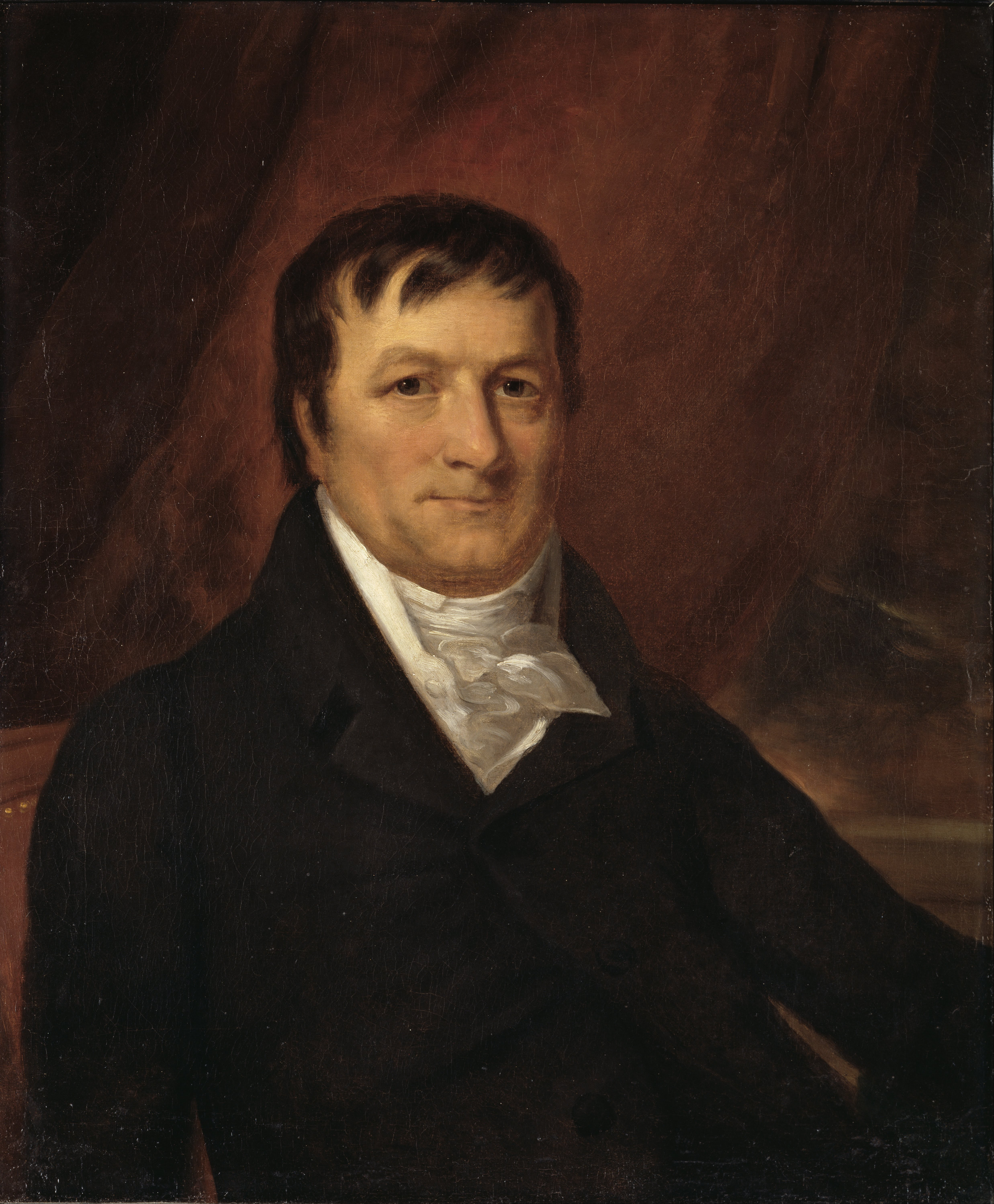
As Wikipedia tersely puts it, "He entered the fur trade and built a monopoly, managing a business empire that extended to the Great Lakes region and Canada, and later expanded into the American West and Pacific coast. Seeing the decline of demand, he got out of the fur trade in 1830, diversifying by investing in New York City real estate and later becoming a famed patron of the arts."
From history.com, we learn, "Quickly learning all he could about the growing American fur trade, Astor made numerous trips to the western frontier, and by the end of the century, he had become the leading fur merchant in the United States. After the Louisiana Purchase of 1803, Astor moved aggressively to exploit this huge new territory for its furs. Although Lewis and Clark’s exploration of the territory brought back the disappointing news that there was no easy water passage across the continent to the Pacific, Astor was nonetheless convinced that a Pacific Coast operation could profitably sell its furs to the huge China market. In 1810, he created the Pacific Fur Company. Within two years, his men had established a trading post named Astoria at the mouth of the Columbia River (about sixty miles northwest of modern-day Portland)."
John would have loved to visit SANS Rocky Mountain 2017 to see for himself how the west has grown up since his day.
And his beloved deep water port Astoria, they are doing just fine. Wikipedia reports, "Today, tourism, Astoria's growing art scene, and light manufacturing are the main economic activities of the city. Logging and fishing persist, but at a fraction of their former levels. It is a port of call for cruise ships since 1982, after $10 million in pier improvements to accommodate these larger ships. To avoid Mexican ports of call during the Swine Flu outbreak of 2009, many cruises were re-routed to include Astoria. The residential community The World visited Astoria in June 2009.[28] The town's seasonal sport fishing tourism has been active for several decade and has now been supplanted with visitors coming for the historic elements of the city. The more recent microbrewery/brewpub scene and a weekly street market have helped popularized the area as a destination."
Subscribe to:
Posts (Atom)